
What is Possible?
On vocation, trust, and discovering that God may not be finished with us yet.

Sunday’s homily asked a question I have been sitting with all day.
What is possible with God, if we trust in Him completely?
I have been a person of faith my whole adult life, and I have heard variations of this question many times in homilies. It usually lands as an aspiration to work towards, hard to do totally but you know, easy to nod to. This Sunday it landed differently. It landed like something I already knew the answer to, because I had just lived it.
As many of you know, Falko Seger, Dr. Stephanie Seneff, and I have just published our review in Acta Pharmaceutica Sinica B. (Note, it is a journal pre-proof, there are a few typos/errors requiring correction). It is one of the highest-ranked journals in pharmacology and pharmacy. Never in my wildest imagination did I think that little old me, a retired pharmacist with no academic appointment or lab, and Falko, a completely self-taught systems biologist, would one day publish there alongside one of the world’s leading researchers.
But the paper is not really the story.
The story starts 3 years earlier.
What is possible?
Sometime in late 2023, I was sitting in a pew in church in considerable pain. I have rheumatoid arthritis, and I was in the middle of a difficult transition. I was withdrawing from tofacitinib and starting a monoclonal antibody, meanwhile quietly terrified that the new treatment would worsen a separate condition, autoimmune neutropenia caused by the tofacitinib itself. Anyone who has managed a complex autoimmune disease knows that particular fear: the treatment that fixes one thing and unmakes another.
I sat there and I did what you do when you have run out of options and was lost. I prayed, honestly and without much dignity. What am I supposed to do with myself, with all this knowledge I’ve accumulated and all this studying I have done on the mrna vaccines. My brain was working fine though my body wasn’t. How do you want to use me? And if you do have something in mind, well you need to make me better first. You know that, right?
The answer I received, and I say received because it came as something more than a thought, was this: patience, and all in due time. You will know what you need to do when the time comes. Typical. But it did sustain me. I wasn’t wasting my time.
Although I have a Doctor of Pharmacy degree, I have no PhD. No academic affiliation. No lab. No research team. No formal scientific credentials of any conventional kind. I have decades of experience in practical pharmacology, hospital pharmacy, infectious diseases, policy and comparative drug analysis, but not the kind that comes with institutional letterhead. By the standards of the world that measures these things, I was not the kind of person who writes papers that get published in serious journals. I was certainly not someone who should be asking God to put serious scientific work in front of them. I was just thinking of small things, talks, presentations, maybe a review paper or two in a low ranking journal.
And yet.
What is possible?
I got better. Slowly, then genuinely better.
Sometime in early 2025, I connected in a more sustained way with a researcher named Falko Seger, whom many of you may know from his years on X as @NarfGb, until the platform removed him, which tells you something about what kind of science he was doing, and maybe for his true but acerbic takes. Falko and I had crossed paths before online, but this was different. We began to work together
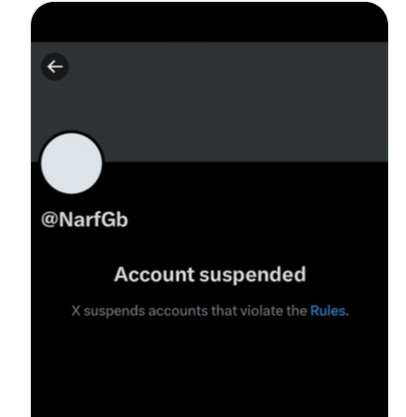
Here is what you need to know about Falko. He has no degree either. None. He is entirely self-taught. He has one of those precise, intense minds that is amazing. The kind that can hold hundreds of research papers simultaneously and synthesize connections between them that most trained scientists never see because their training has often given them walls as well as windows. His area was the intracellular biology and systems biology of lipid nanoparticles. Mine was their manufacturing, biodistribution, and pharmacological behavior. We were, in other words, looking at the same thing from opposite ends. I thought I could help him reach his goals. After all, I had mentored many junior hospital pharmacists and was pretty good at it. This wasn’t any different, was it?
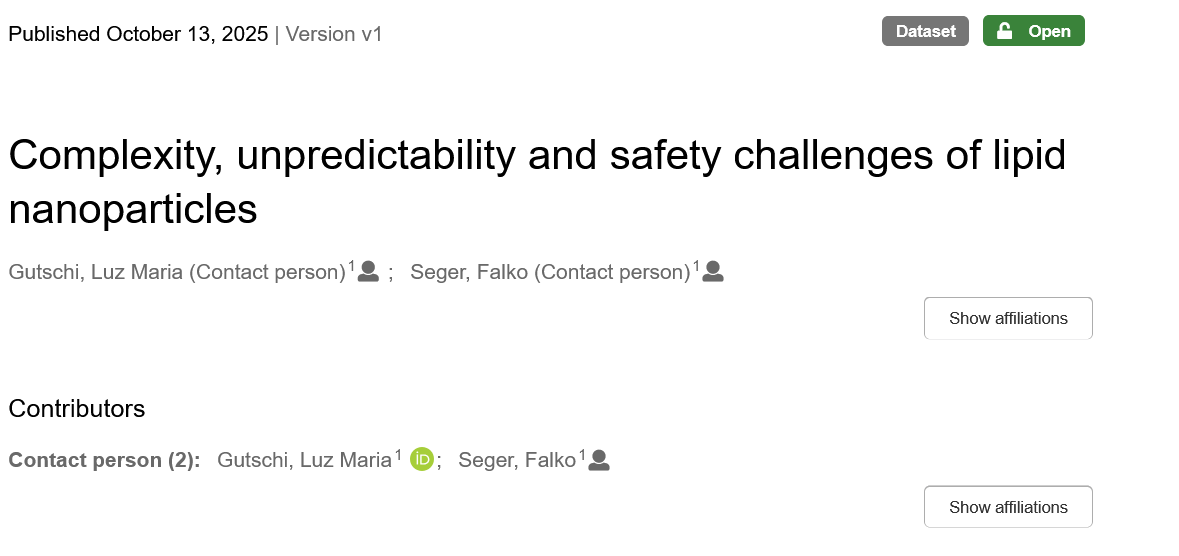
We eventually started writing. Our first effort was this Complexity, Unpredictability and Safety Challenges of Lipid Nanoparticles (Complexity, unpredictability and safety challenges of lipid nanoparticles) which I placed on ResearchGate and on Zenodo as a preprint. This generates a DOI. Falko wanted a DOI. That was all he wanted he told me. Something modest but real. Just a DOI, Maria.
It got over two thousand views and a thousand downloads. I was a bit long, and maybe a bit sloppy. But we were both surprised. Two people with no institutional address, no grants, no department behind them, and scientists and researchers were reading it.
What is possible?
But I had another problem. Falko wanted to go further. The systems biology was his deepest work, his real contribution, and I could not keep up. I could not adequately check his reasoning, could not see where the gaps might be, the potentially missing context, could not provide the kind of intellectual depth the work needed. We needed someone with genuine depth in systems biology. Someone with standing.
A good friend suggested Dr. Stephanie Seneff of MIT.
I thought they were joking.
Two self-taught researchers with no credentials, one of them younger and working from Germany, one of them past retirement age, without real scientific training and managing a chronic illness approaching one of the most published and cited scientists in the field? I wrote the email anyway, because my friend insisted and because at some point faith means doing the thing that seems improbable.
Dr. Seneff asked to see the proposal. She read it. She was interested. She came aboard and took a chance on us.
What followed was months of the most sustained intellectual work I have done in my entire life. Heavy writing for four months from a draft that had taken two months to build. Dr. Seneff kept us focused and on track. Falko was patient beyond any reasonable expectation in teaching me his hypothesis and the evidence behind it. I concentrated on what I actually know how to do, comparative pharmacological analysis, formulation and colloid science from my earliest days, and building tables that make complex data navigable. It turns out that skill, which I developed over years in government and have always considered almost embarrassingly simple compared to original research, turned out to be genuinely useful in a paper trying to integrate many streams of evidence.
We sent the paper to a western journal specializing in membranes. We were desk-rejected in two days, with a pointed comment about Dr. Seneff’s profile. I will not pretend that didn’t sting.
What is possible?
I was just searching for papers that described some of what we were discussing in our draft when I found a paper in Acta Pharmaceutica Sinica B (APSB) which covered some of the same science; the pathway of LNPs through the body. It was well done. I suggested APSB to the team. I had no real idea what the journal was. I just followed the instinct.
Acta Pharmaceutica Sinica B is, as it turns out, a Q1 journal with an impact factor of 14.4, an H-index of 146, and a cite score of 24.4. It is one of the most rigorous open-access pharmacology journals in the world. Had I known that before I suggested it, I would not suggest it. No way.
We submitted on December 19th, 2025. On December 20th, the editor had sent it to peer reviewers. I did not know at the time that this speed is unusual and meant the editor read it and judged it worthy of review and sent it off expeditiously. And we were not desk-rejected.
After the reviewers’ comments came back, we rewrote the whole paper intensively. Several more rounds of formatting, clarification, and revision followed. And then, this week: acceptance and the pre-journal proof in our hands. It took almost 7 months. Now I see why.
A paper by Falko Seger, Stephanie Seneff, and me, published in one of the most selective pharmacology journals in the world.
What is possible?
I keep coming back to the improbability of this. No degrees between two of the three authors. One retired, one self-taught, one fighting through a difficult stretch of illness during the years this work was building. One sometimes considered controversial. A desk rejection that felt like a door closing. A journal suggestion made on instinct with no knowledge of the journal’s standing. An editor who sent it forward the next day. (We thank the editors and reviewers at APSB. They were tough but helpful, fair and clear in what they wanted. We will not forget they opened the door to us.)
And behind all of it, a moment in a pew in late 2023, in pain, asking a plainspoken question and receiving a plainspoken answer. Patience. All in due time. You will know what to do when the time comes. I did not know then what I was being patient FOR. I do now.
Sunday’s homily was not, for me, an inspiration. It was a confirmation. What is possible with God, if we trust in him completely?
This. Apparently, this.
And that is why I ask for all who are willing, to pray the rosary. I do not know where this will lead, my health, funnily enough, is having some issues now. But God is good always, and He is not done with us yet.
The paper, whose subject I will write about separately for those interested in the science, is published in Acta Pharmaceutica Sinica B. I am grateful to Falko Seger for his extraordinary mind and his patience with mine, to Dr. Stephanie Seneff for her generosity and her focus, and to the friends whose introductions and encouragement made this collaboration possible. To my hubby who put up with a wife who for years disappeared into papers and scientific discussions and formatting hell. And to the One who told me to be patient.
Congratulations @CanningPharm @stephanieseneff @NarfGb
on this landmark review of the "mechanistic framework for understanding the persistent biological effects of modified modRNA-LNP exposure and emphasizes a systems-level intracellular perspective."
https://x.com/AdhesionsOrg/status/2077770048425353543
Outstanding work Maria and thank you for helping another uncredentialed curious mind doing his own research in trying to understand the "science." Please give my kindest regards to Narf.